Planning home EV charging? Start before you buy the charger.
For Beverly Grove-area owners and buyers: separate electrical-service planning, City of Los Angeles permits and LADWP rebate paperwork before committing to home EV charging.
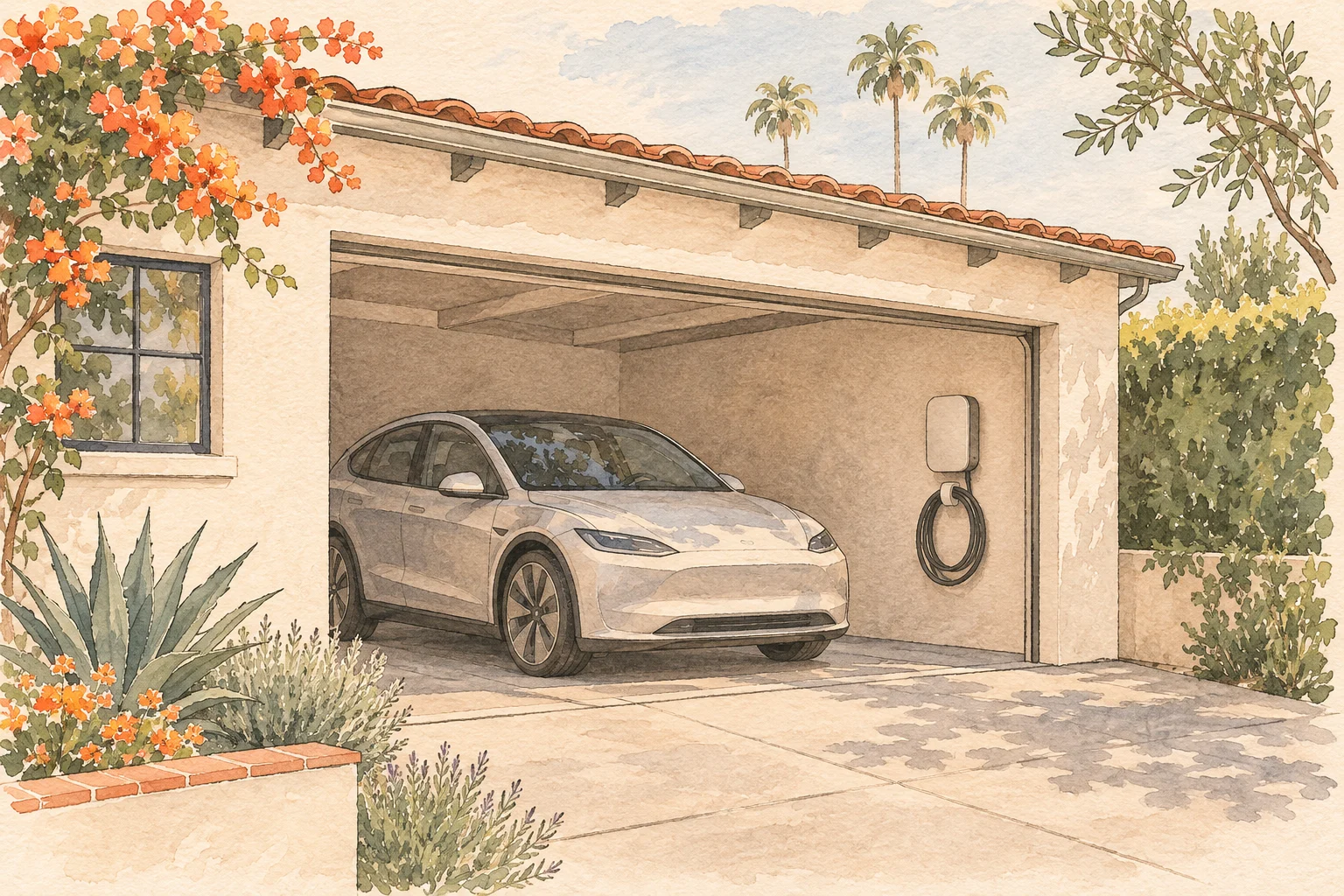
A garage can look ready for an electric car without answering the question that matters: what would charging there actually involve? For a Beverly Grove-area buyer comparing homes, or an owner planning improvements, the useful starting point is a project conversation rather than a charger shopping cart.
Separate three decisions: whether the property can support the proposed installation, how the work will be permitted and inspected, and whether it meets a particular incentive program’s requirements. A favorable answer to one does not establish the others. The official Los Angeles resources below help you organize those conversations without treating a listing description as an electrical assessment.
Confirm the address, provider and parking arrangement
Begin with the actual electricity provider and permitting jurisdiction, not the neighborhood name. This guide’s permit links are for the City of Los Angeles; its residential rebate discussion is for LADWP customers. Do not carry those instructions over to a nearby municipality, including West Hollywood, without checking the responsible authority.
LADWP’s residential program page identifies eligible applicants as account holders with an active LADWP electric meter on a residential rate plan. A Los Angeles mailing address alone is not the eligibility test.
Write down where the car normally parks and which questions remain unresolved. For shared or assigned parking, identify who needs to participate before choosing equipment. LADWP’s installation guidance specifically advises renters and people subject to HOA rules to discuss the project with the property owner and association before final decisions. It also flags additional planning for multifamily installations.
Arrange the assessment before fixing the scope
The same installation guidance distinguishes two roles. The electrical contractor examines wiring beyond the meter; LADWP’s Electric Service Representative assesses utility-side service capacity up to the meter and possible utility work. A panel upgrade may be needed, but it is not a conclusion to draw from the age or appearance of a house.
LADWP recommends a preliminary service assessment and provides a residential EV charger request route. Ask the electrician and utility what remains to be investigated before treating a proposal as complete. For your own planning notes, separate confirmed work, possible additional work and unanswered questions. That makes it easier to understand what a quoted price does and does not cover.
Keep permitting separate from utility coordination
The City’s Building and Safety EV section links its online electrical-permit system and permitting checklist. Use that official entry point with the professional handling your project; this article does not determine which permit path applies to your property.
Ask who will obtain the necessary permits, request inspections and supply the final records. Put those responsibilities beside the installation scope, rather than assuming that a utility conversation or equipment purchase completes the process. Our contractor-comparison guide can help with the separate hiring decision.
Read the rebate requirements before spending
LADWP’s program page links qualifying products, application materials and current terms. It states that the terms prevail over inconsistent summaries. Check the exact model and your circumstances with the program before building a budget around an incentive. A possible rebate is not an approved payment or a deduction already available at checkout.
The program FAQ explains that rebate applications follow installation. Its documentation checklist includes itemized paid invoices, equipment identification, photographs and finaled electrical-permit evidence as applicable. Installation-cost claims require licensed-electrician information. Review the current application deadlines and complete checklist for your claim; an appointment request is not a rebate application.
Ask for the records as the project progresses and keep copies in one private folder. The FAQ also makes funding availability part of the review, so do not present a hoped-for reimbursement as a guaranteed project saving.
Evaluate the optional meter and rate separately
Buying a charger does not automatically move its electricity use onto a discounted rate. LADWP’s official EV-rate page says the charger must be separately metered from the main meter, with the EV meter on a Time-of-Use rate. The page also identifies minimum charges and adjustments. The advertised discount is not, by itself, a calculation of your total bill.
The residential FAQ recommends obtaining an itemized electrician’s quote for a dedicated meter and discussing rate options and cost-effectiveness with an LADWP program specialist before installation. Bring your expected charging routine to that conversation. For a practical comparison, keep the proposed installation expense, any separately approved rebate and the ongoing electricity charges in different lines of your planning file. Ask what assumptions the comparison uses and what changes if your routine changes. This guide does not select a rate or predict a payback period.
For a home search, carry questions rather than assumptions
If a property already has charging equipment, ask which equipment remains and what installation records are available for professional review. If it has none, keep feasibility and cost as open questions until assessed. A useful comparison file records what is known, who confirmed it and what still needs an answer.
Bring the property questions to Michael and Gabriel, and the electrical decisions to qualified professionals. That division keeps the home search practical without promising that every garage, parking space or existing charger will fit your plans.
Go to the source
- LADWP: residential charger installation and service assessment ↗
- LADWP: residential EV charger rebate program and current application links ↗
- LADWP: residential EV charger rebate FAQ and documentation ↗
- City of Los Angeles Building and Safety: EV permit entry point and checklist ↗
- LADWP: optional EV rate, separate metering and billing conditions ↗
Official LADWP and City of Los Angeles Department of Building and Safety sources checked November 8, 2026. The optional EV-rate discussion was added in a same-day revision. These pages display no publication dates for the EV guidance; this is a planning guide, not an announcement of a new rule or incentive. Confirm current project requirements and program terms directly with the responsible agencies. No account, permit or rebate application was submitted or tested.
General planning information, not electrical, engineering, legal, financial or installation advice. Use a qualified licensed electrician and the responsible utility and permitting authority for site-specific decisions. No installation feasibility, cost, completion date, rebate, energy saving or property-value increase is guaranteed. Do not submit utility account details or private project documents to this website. Our editorial policy.
A property question?
Michael and Gabriel can help you organize the real estate questions and identify the next conversations to have.
Contact Michael + Gabriel →