A nearby exhibition, a wider view of Los Angeles homes.
LACMA’s Paul R. Williams exhibition opens November 15. A source-linked guide to its architectural context, the archive behind it and a more thoughtful way to look at homes.
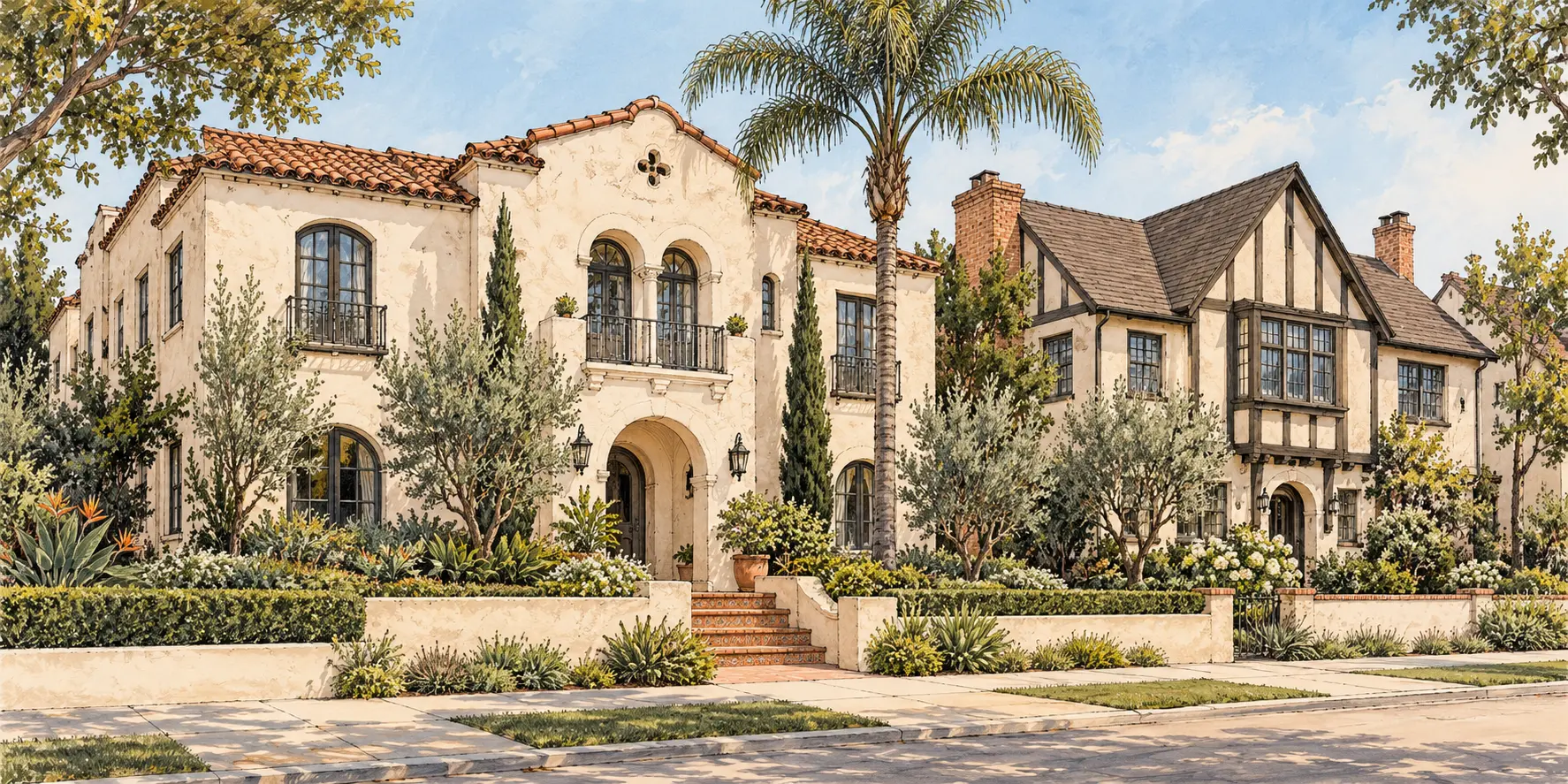
A museum exhibition can change the questions you bring home. Instead of stopping at whether a house looks Spanish, traditional or modern, you might begin to notice how its rooms connect, how an entrance prepares you for what follows, or how a building makes space for several households rather than one.
That is a useful lens for Beverly Grove-area readers as LACMA prepares to open Paul R. Williams: Architect for Living on November 15. The museum is nearby on Wilshire Boulevard, south of Beverly. The exhibition offers a reason to look beyond the familiar shorthand of an architect associated with celebrated homes and consider a much broader practice.
The upcoming show, in context
LACMA’s official exhibition page lists November 15, 2026 through May 31, 2027 in the Resnick Pavilion. It describes Williams’s work across residential, civic, religious, commercial and hospitality projects, with drawings and photographs from his archive that have not previously been exhibited.
The range matters. LACMA places his contribution within Los Angeles’s growth from the 1920s through the early 1970s, rather than presenting one house type as the whole story. For a reader interested in local architecture, that creates an opportunity to compare different purposes and scales. What does a designer carry between a private home, a shared residential building and a public-facing space? Treat that as a question to explore, not a conclusion about objects not yet seen.
The archive is part of the story
Getty’s June 30, 2020 announcement records the archive’s joint acquisition by the Getty Research Institute and USC School of Architecture. It describes plans, original drawings, renderings, photographs and correspondence, including material for projects that were never built. Williams’s granddaughter, Karen Elyse Hudson, had cared for the collection.
That distinction between a design and a completed building is worth carrying into the gallery. A drawing can show an intention, an alternative or an unrealized proposal. A photograph records a different kind of evidence. When a label provides a date or identifies a project’s status, read it alongside the image rather than assuming every beautiful rendering describes something constructed exactly that way.
Look beyond the single-family house
Getty’s ongoing research project connects the archive to coordinated exhibitions at Getty, USC and LACMA. The broader initiative is useful context, but the venues have separate programs and visiting arrangements.
USC Fisher Museum’s An Architect Considered, a separate exhibition away from this neighborhood, focuses on modern multifamily housing. Its published dates are August 18, 2026 through March 13, 2027. Archival drawings are paired with new commissions by contemporary artists and architects. That housing focus offers a counterpoint to looking at residential architecture only through detached homes or famous owners.
Bring a few questions back to the neighborhood
One useful exercise is to follow a sequence rather than collect style labels: street to entrance, entrance to shared or private space, then the relationship between rooms and outdoors. Which decisions seem to support everyday use? Which details create ceremony? These are prompts for attentive looking, not claims about the exhibition’s installation or any particular Williams building.
Keep admiration separate from attribution. A familiar arch, roofline or period detail does not establish who designed a house. Our period-revival architecture guide explores another local context; the property-records guide addresses the separate task of researching an individual building.
Plan the visit with the museum
LACMA is at 5905 Wilshire Boulevard. Its visitor page recommends advance timed-entry tickets because walk-up timeslots can sell out. Check current hours, access and ticket terms directly before leaving; an exhibition date is not a reservation or a promise of admission.
The value of the visit need not be a new label for your own home. It can be a more precise way to notice how buildings work, and a clearer distinction between an appealing story and evidence supporting it.
Go to the source
- LACMA: exhibition dates, location and curatorial overview ↗
- LACMA: current visitor and ticket information ↗
- Getty: archive acquisition, published June 30, 2020 ↗
- Getty: Paul R. Williams research project ↗
- USC Fisher Museum: separate multifamily-housing exhibition ↗
Five official LACMA, Getty and USC Fisher Museum sources checked November 12, 2026. Getty’s archive-acquisition announcement was published June 30, 2020; the other linked pages display no publication dates. LACMA lists November 15, 2026–May 31, 2027 for the upcoming exhibition. This guide was prepared before its public opening, not from personal attendance or an exhibition review. A legacy Getty exhibition URL was inaccessible and is not used as a source. Confirm current exhibition access, hours and tickets directly with the museum.
Editorial architecture and cultural context, not a property attribution, appraisal, historic-designation determination or architectural assessment. No featured or nearby home is represented as a Williams design. A museum visit does not establish a property’s authorship, condition, development rights or value; investigate property-specific claims with qualified professionals. Our editorial policy.
A property question?
Michael and Gabriel can help you organize the real estate questions and identify the next conversations to have.
Contact Michael + Gabriel →